
Back
Scar correction/surgical and non-surgical
Medically reviewed by Dr. Shirin Milani / Dr. Veith Moser — Specialists in Plastic, Aesthetic and Reconstructive Surgery (Austrian Medical Chamber)Last updated: 28.07.2026
How scars form is genetically determined. However, there are situations in which scar healing is unfavorable due to external influences or where the scar becomes visible in a particularly disadvantageous area.
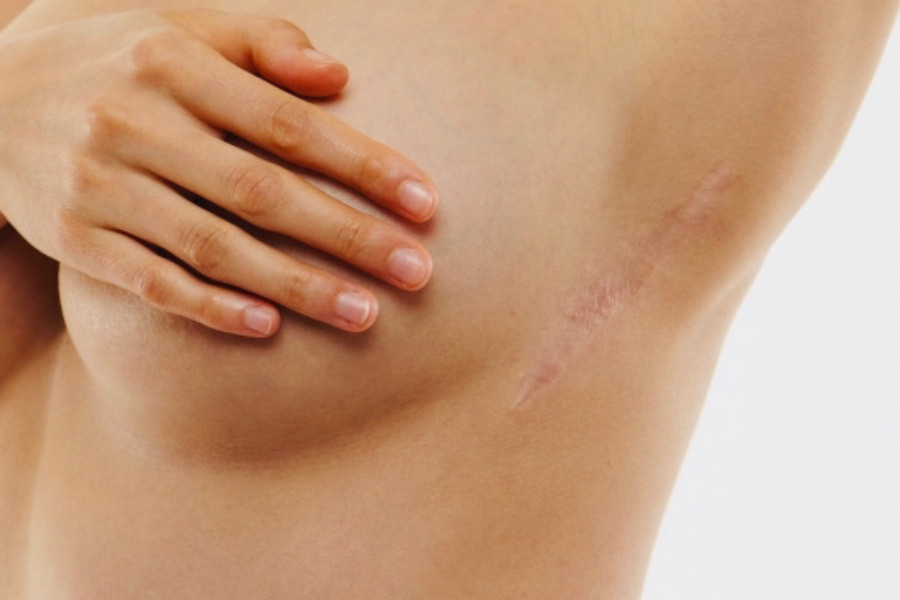
Scar correction/surgical and non-surgical
Scars occur when the uppermost layers of skin are injured right down to the middle of the dermis. If the skin is only damaged on the surface, there will be no scar. The development of a scar depends on many factors:
- Age
- Skin color
- Scar progression (if a scar is “wrong”, i.e. across to the skin lines, the scar will become bulging and must be surgically “relocated”
- Type of scar (e.g. spread out over a large area or slim)
The following treatments are available for scar correction:
- Medical needling or stamping of the scar
- Microdermabrasion
- Cosmelan therapy
- Lymphatic drainage
- Cortisone injection
- Fraxel Laser< /li>
- Co2 Laser
Surgical scar correction
In In many cases, surgical scar correction can be useful. In the case of bulging scars, correction should be attempted before the operation by injecting with substances that inhibit scar formation. To do this, the scar must be injected several times at defined intervals. Spot scars (e.g. acne scars) can also be corrected by injecting hyaluronic acid.
Operative Narbenkorrektur im Überblick
Operating time: 1 hour
Anesthesia: local anesthesia with twilight sleep, possibly general anesthesia
Hospital stay: outpatient or 1 night
Sport: after 3 to 4 weeks
Inability to work: only with major corrections
Before Surgery
- For a period of around 14 days before the scar correction operation, you should avoid medications that contain acetylsalicylic acid (e.g. aspirin, ASA, etc.), as these impair blood clotting.
- You should also largely avoid alcohol, cigarettes and sleeping pills. Nicotine can also reduce blood flow to organs and delay wound healing. Therefore, avoid nicotine two weeks before the operation and also during the wound healing phase.
After Surgery
- Stringing: after 5 to 14 days
- Massage of the scar with a special scar ointment from the 3rd week for 3 months
- Fresh scar protected from the sun ;tzen
- Special scar plasters and/or laser treatment can have a positive effect on scar formation
Surgery Highlights
As a rule, surgical scar correction is carried out on an outpatient basis under local anesthesia. General anesthesia may be necessary if scars are painful or have grown firmly into the surface. After collection, the tissue is sent for examination. The surrounding skin is loosened and re-sewn in layers.
Possible Risks
Any swelling and discoloration caused by bruising in the surgical area will subside after two to three weeks. A recurrence can occur, especially in areas that are predilection for poor scar healing (ear, shoulder, décolleté) and in areas that are very mechanically exposed.
Duration
30 min
Book an appointment